Why the attachment keeps driving
Releasing the auger control should remove belt tension and allow the brake or stopping mechanism to do its job. If the belt remains pinched against the engine pulley or the brake never reaches its released position, enough torque can remain to turn the auger.
The common causes
- An incorrect belt length, width or cross-section
- A belt routed on the wrong side of an idler or guide
- Belt keepers adjusted too close, bent or installed in the wrong position
- An idler arm or pulley that does not return freely
- An over-tight or incorrectly adjusted engagement cable
- A damaged, missing or misadjusted auger brake
- Pulley bearing trouble or alignment that keeps the belt wedged
A fresh belt can expose the real problem
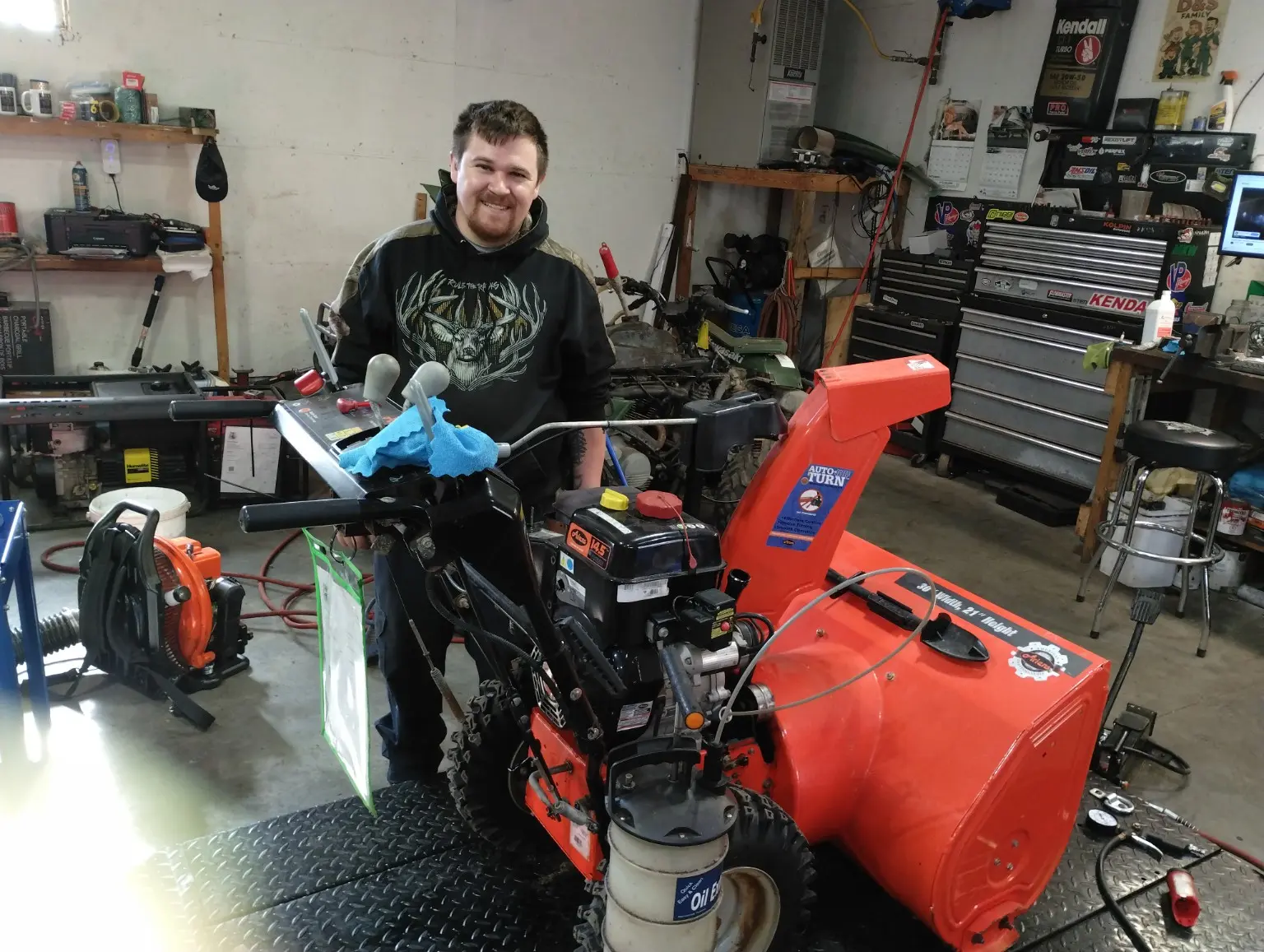
One snowblower problem from the D&S history involved a replacement belt that continued to drive the attachment while disengaged and began burning. The nominal belt length alone did not solve it; the tensioner position and how the belt released from the pulley path had to be considered.
That pattern is useful: when a new belt burns quickly, do not automatically install another one. Heat is evidence of slip, drag, misrouting, a seized component or a belt that does not belong in that drive geometry.
A correct replacement restores the designed engaged and disengaged positions. It should not need a safety system defeated to make it fit.
What the wear marks can tell you
- Glazed belt sides: ongoing slip or a pulley/profile mismatch
- One burned section: a seized pulley or belt trapped while the engine pulley kept turning
- Frayed edge: alignment, guide contact or incorrect routing
- Rubber dust near one pulley: drag or excessive wrap at that location
- Auger stops only at very low idle: insufficient release clearance or brake action
Stop before inspecting
Shut the engine off, remove the key, disconnect the spark-plug lead and wait for every component to stop. Never reach into the auger housing, chute or belt area with the engine running. Use the clean-out tool for snow blockages and have a non-disengaging attachment repaired before the machine goes back into service.
A snowblower attachment that will not stop is a safety failure. Diagnose the release system before another belt — or another hand — pays for it.
This is general information, not a diagnosis of your machine. Shut equipment down, remove the key, isolate the spark plug or battery as appropriate, let hot parts cool and keep fuel away from ignition sources. Stop if the check involves exposed moving parts, safety interlocks, internal timing or anything beyond your experience.