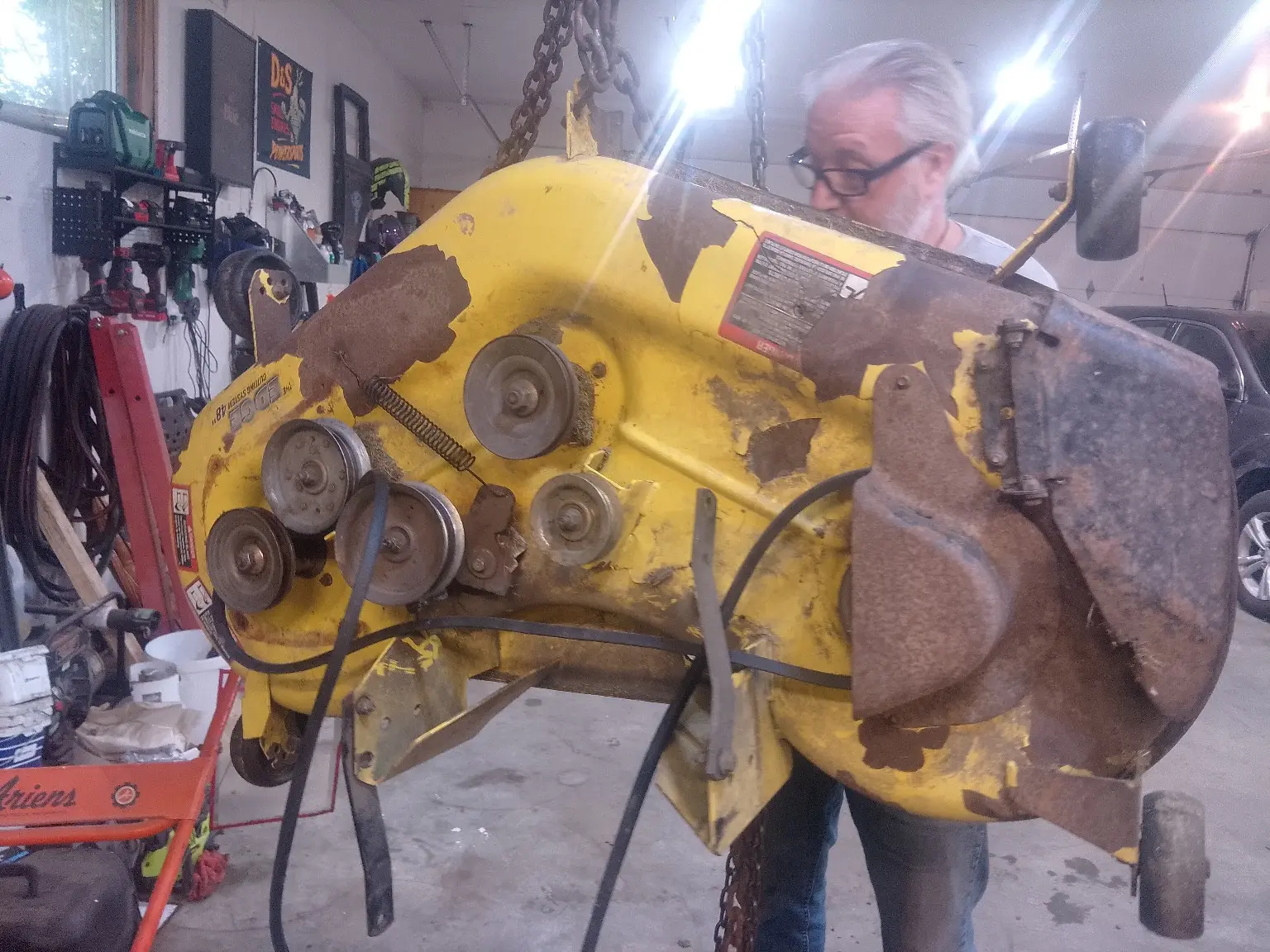
First prove the belt is correct
A belt can look close, install successfully and still be wrong. The correct part number, effective length, width and profile all matter. A fractional difference changes where the tensioner sits and how deeply the belt rides in the pulleys.
- Use the tractor and deck model numbers — not only the mower brand
- Compare the full belt number and cross-section, not just an advertised length
- Confirm the routing against the correct deck diagram
- Check whether the belt is meant to run on its V side or flat back at each pulley
Check the entire path
Sight across the pulley faces. The belt should not be climbing sideways, rubbing a bracket or changing angle as the deck moves through its height range.
- Idler pulleys that wobble, bind or sound dry
- Spindle bearings with play or a pulley that runs out of true
- A tensioner arm that is seized, bent or loose on its pivot
- A stretched, incorrect or weak tensioner spring
- Bent belt keepers or guides with excessive clearance
- Deck hangers, brackets or a deck shell that put the pulleys out of plane
- Grass, wire or debris packed where the belt needs to travel
The repeat failure is the clue
In one real D&S case, worn and noisy pulleys were found and corrected. The deck initially tested well, but the belt later came off repeatedly in a short period on level ground. That changed the question from “is the belt bad?” to “what is allowing tension to disappear?” Attention moved to the tensioner spring and the way the system held the belt under changing load.
A machine that passes a brief stationary test can still expose a weak spring, moving bracket or alignment problem once the deck loads up in real grass.
Patterns that point somewhere specific
- Comes off when disengaging: look closely at the brake, guides and slack control
- Comes off on bumps or at one deck height: inspect hangers, deck movement and keeper gaps
- Burns or glazes: suspect slip, a seized pulley, wrong routing or incorrect belt profile
- Shreds one edge: look for misalignment, a bent guide or sharp contact point
- Works cold, fails hot: consider a weakening spring, bearing or moving tensioner pivot
Keep hands out of a live deck
Never watch the belt with covers removed and the deck running. Shut the engine off, remove the key, disconnect the spark-plug leads and wait for every rotating part to stop before inspecting. Replace the correct spring or damaged hardware; do not defeat guards or improvise a tensioner that changes the designed engagement and braking action.
If a deck keeps throwing belts, stop feeding it belts. Find the movement, lost tension or alignment error that is making them leave.
This is general information, not a diagnosis of your machine. Shut equipment down, remove the key, isolate the spark plug or battery as appropriate, let hot parts cool and keep fuel away from ignition sources. Stop if the check involves exposed moving parts, safety interlocks, internal timing or anything beyond your experience.