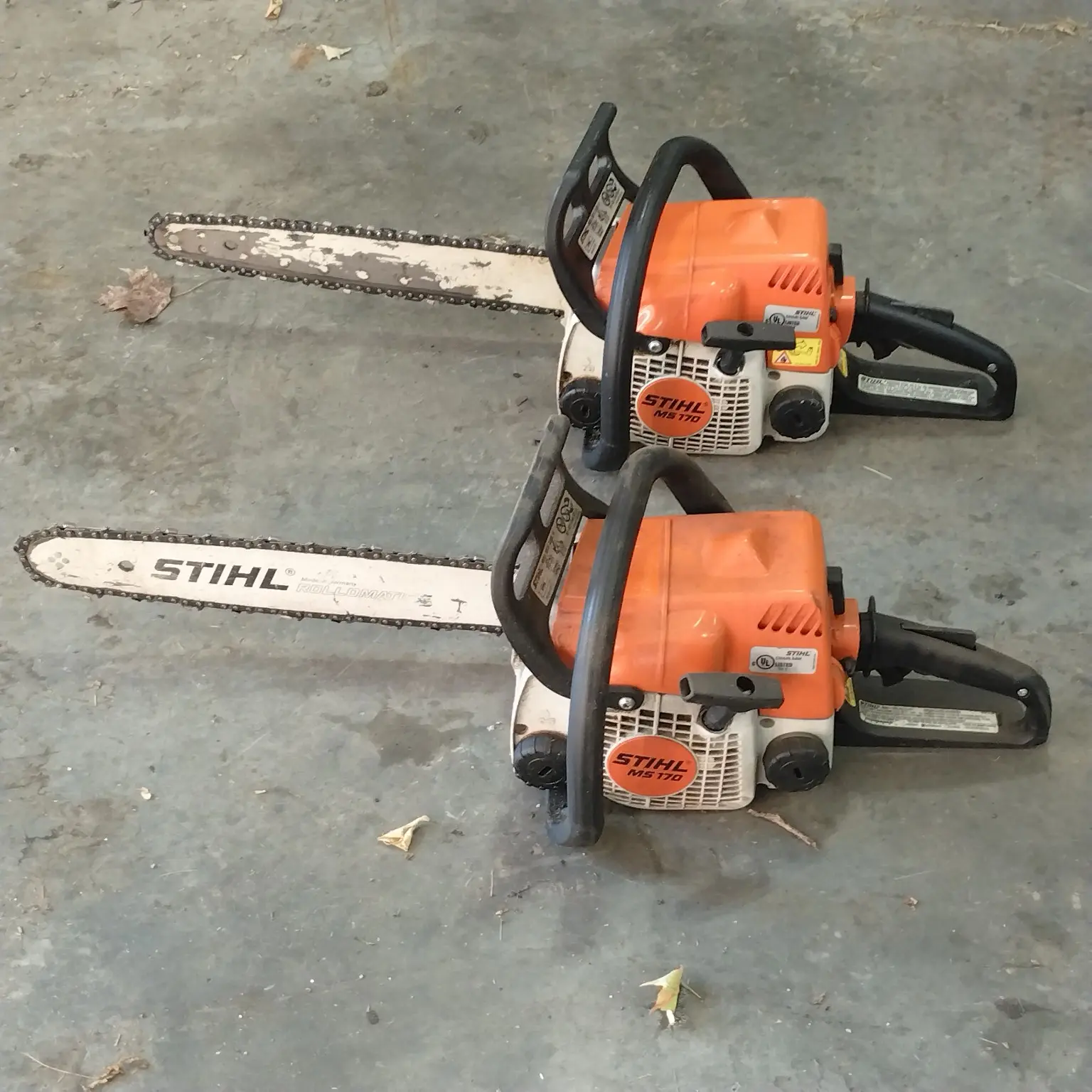
The three numbers
If one number is wrong, the chain is wrong. A mismatched pitch will not correctly engage the sprocket. The wrong gauge may not enter the bar groove or may fit dangerously loose. The wrong drive-link count makes the loop the wrong length.
- Pitch: the spacing of the chain and drive sprocket, commonly 3/8-inch low profile, .325-inch or 3/8-inch
- Gauge: the thickness of the drive link that fits the bar groove, commonly .043, .050, .058 or .063 inch
- Drive links: the exact count of the tangs that travel inside the bar groove
Where to find the specifications
Start with the guide bar. Many bars stamp or etch pitch, gauge and drive-link count near the mounting end. The saw model label and manufacturer parts lookup can confirm the original setup, but remember that a previous owner may have changed the bar and sprocket.
- Read both sides of the bar near the powerhead
- Use the numbers from the installed bar when it differs from the original saw specification
- Count drive links when the marking is missing or the old loop is being matched
- Do not confuse cutter count with drive-link count
Bar length is not an identifier
D&S has sourced, among many others, a 24-inch chain specified as 3/8 pitch, .050 gauge and 84 drive links, and a 16-inch setup specified as .325 pitch, .063 gauge and 67 drive links. Those complete descriptions identify the loops. “Twenty-four inch” and “sixteen inch” by themselves do not.
The exact combination belongs to the installed bar and drive system. Never treat these examples as universal sizes for every saw with the same bar length.
If the markings are gone
Pitch can be calculated by measuring the distance across three consecutive rivets and dividing by two. Gauge is best checked with an accurate gauge tool or caliper, and drive links can be marked and counted one by one. If wear or measurement uncertainty makes the answer questionable, bring the bar, chain and saw together.
Fit and tension still matter
After the correct chain is installed, the cutters must face forward on the top of the bar, the drive links must seat fully and the chain must move freely by hand with the brake released and the engine off. Set tension to the manufacturer's procedure and recheck it after the first warm-up. A chain that binds, sags, derails or cannot be adjusted into range needs investigation before use.
Bring three numbers, not one bar length. Correct pitch, gauge and drive-link count turn chain shopping into matching instead of gambling.
This is general information, not a diagnosis of your machine. Shut equipment down, remove the key, isolate the spark plug or battery as appropriate, let hot parts cool and keep fuel away from ignition sources. Stop if the check involves exposed moving parts, safety interlocks, internal timing or anything beyond your experience.