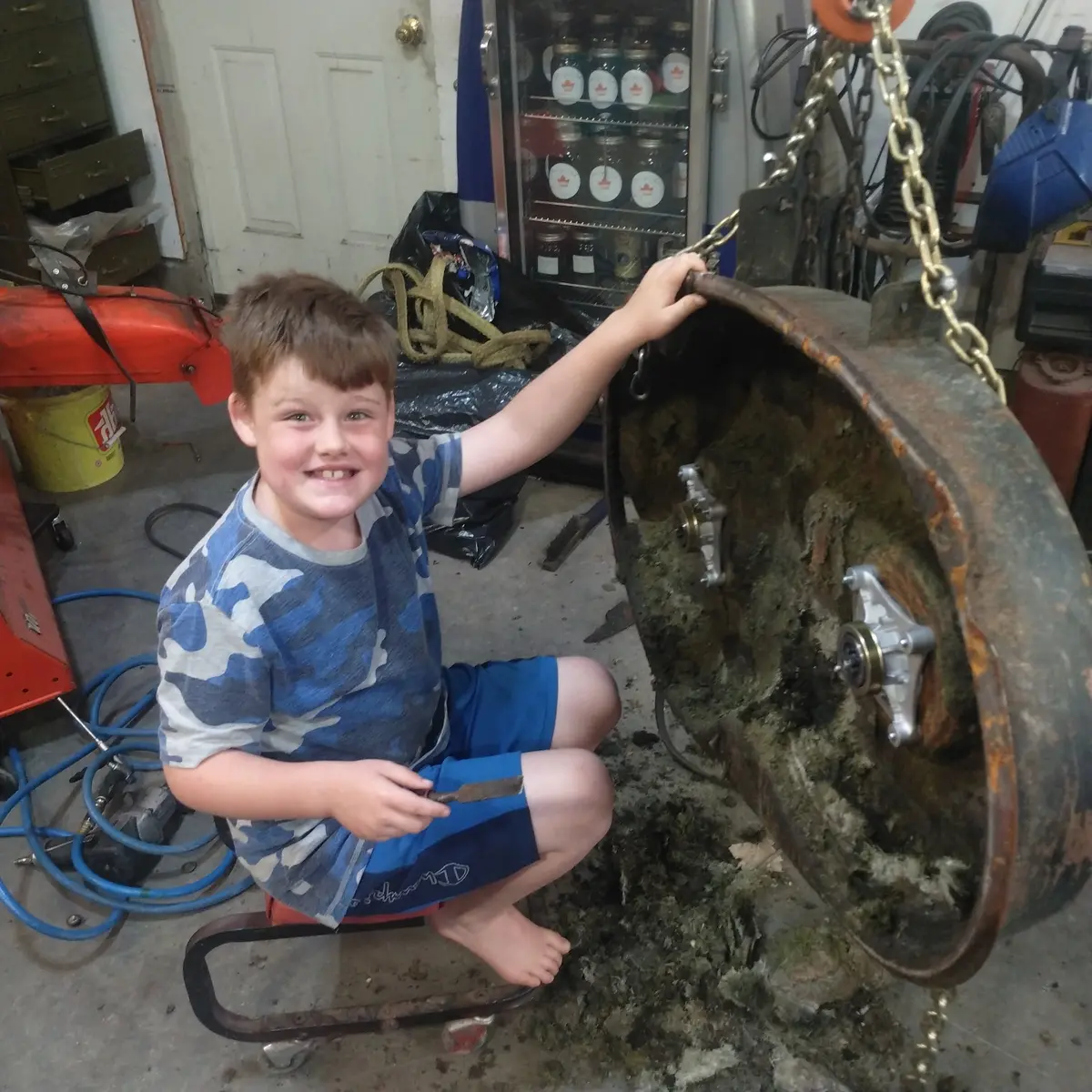
The twin-belt wrong-part problem
A real D&S parts problem involved replacement spindles arriving for a deck with a twin-belt setup — and they were wrong. The tractor description had not captured the details that made that deck different.
That is common on older equipment. A deck may be optional, replaced, shared across several tractors or revised during production. The deck tag often matters more than the hood badge.
Identify the deck itself
Search by the most specific identifier available. A tractor model narrows the family; a deck number identifies the attachment.
- Deck model, product and serial tag
- Cutting width and exact blade count
- Single- or twin-belt routing
- Stamped numbers on the old spindle, pulley or housing
- Original blade number and centre-hole shape
- Photos of belt routing, brackets and mounting flange before disassembly
Compare the dimensions that control geometry
Two spindles can bolt into the same pattern but place the pulley at a different height. That turns a part-fit mistake into belt misalignment and repeat failure.
- Number, spacing and diameter of mounting holes
- Housing pilot diameter and flange offset
- Overall shaft length and threaded section
- Pulley mounting style, diameter and installed height
- Blade shoulder and star, round, diamond or other drive shape
- Grease fitting, bearing stack and dust-shield clearance
Twin-belt decks add another relationship
On a twin-belt system, the centre spindle or transfer pulley may drive a second belt at a different plane. Pulley stack height, spacer order and shaft design have to preserve both belt lines.
A spindle that works on a single-belt version may physically mount yet put the second belt out of plane or leave no correct place for the pulley stack.
Save every spacer, washer and pulley in order during disassembly. A photo before removal is often worth more than a diagram for a previously modified deck.
Do not modify the deck to fit the listing
Elongating holes, stacking random washers, flipping pulleys or substituting a close-looking blade interface can affect alignment, blade retention and deck braking. If the part requires improvisation, stop and re-identify the assembly.
What to send with a parts request
- Clear deck-tag photo
- Tractor and engine tags as supporting information
- Top and bottom photos of the old spindle
- Mounting-hole centre measurements
- Shaft, pulley and blade-interface measurements
- Belt routing and pulley-stack photos
Order the spindle for the deck you have, not merely the tractor that carries it. Correct geometry matters after the bolts line up.
This is general information, not a diagnosis of your machine. Shut equipment down, remove the key, isolate the spark plug or battery as appropriate, let hot parts cool and keep fuel away from ignition sources. Stop if the check involves exposed moving parts, safety interlocks, internal timing or anything beyond your experience.