What the symptom actually says
A normal combustion event should be contained while both valves are closed. A pop, cough or flame travelling out through the carburetor means pressure found a path back into the intake tract.
That can happen because the mixture was too lean to burn normally, because the intake valve was open or leaking at the wrong moment, or because ignition and valve events are no longer properly timed.
The timing of the backfire matters
- During cranking: verify valve motion, compression and basic ignition timing
- On acceleration or under load: lean fuel delivery, intake leaks and weak valve control move higher on the list
- After a sharp impact, kickback or sudden stop: inspect mechanical and flywheel timing
- After recent carburetor or valve work: recheck assembly, linkage, gaskets and clearances
- Hot only: consider a sticking valve, tightening clearance, ignition breakdown or heat-related air leak
Valve trouble can impersonate carb trouble
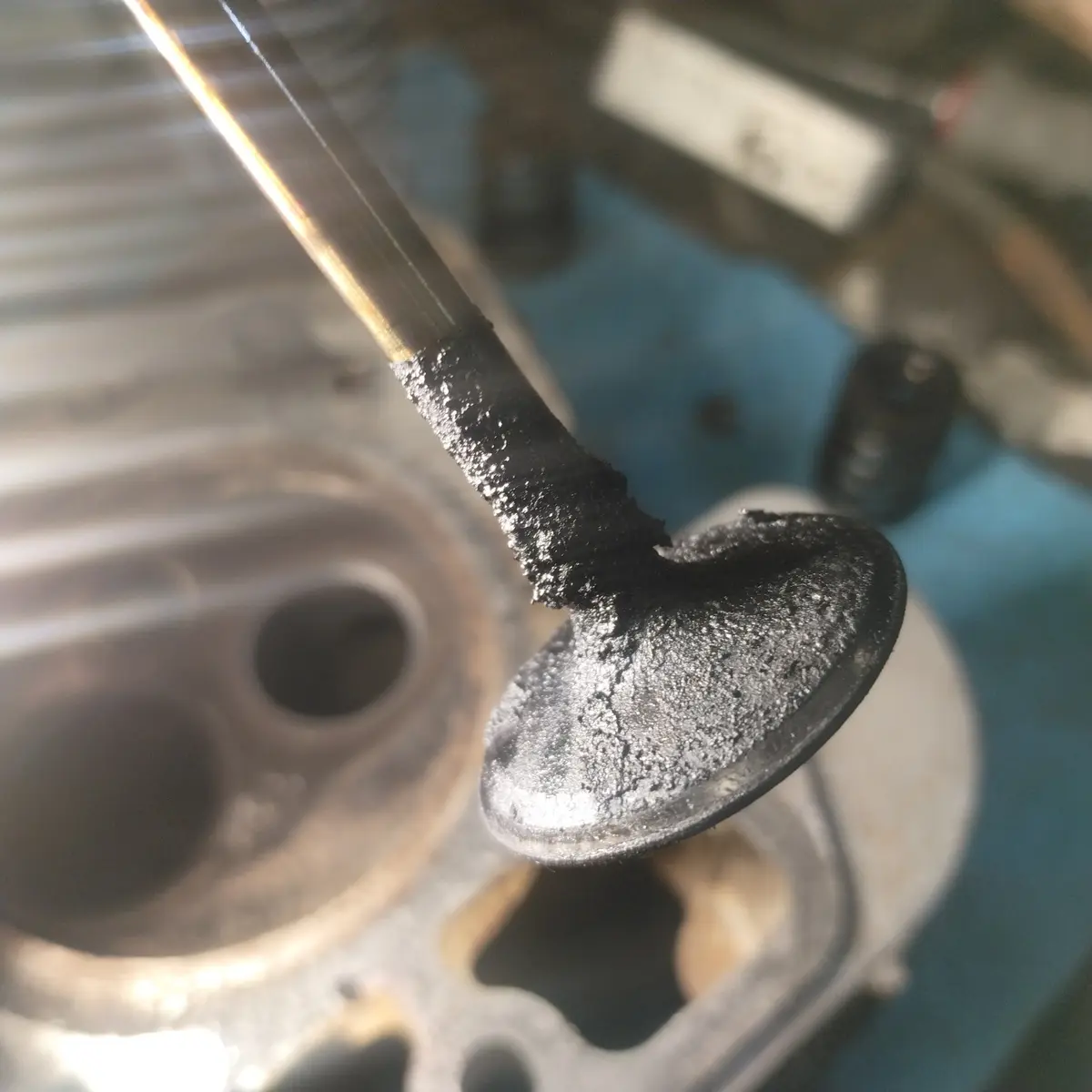
D&S has dealt with OHV engines where the valve train was the real story. A moved valve guide, a bent or displaced pushrod, excessive clearance or a valve that does not travel correctly can leave the intake path open when cylinder pressure arrives.
One single-cylinder case showed an unusually large intake-valve clearance and pushed pressure back through the carburetor. A V-twin case put attention on a valve guide that had moved. In both patterns, cleaning or replacing the carburetor alone would not restore correct valve operation.
Before blaming fuel, watch what the rocker arms and valves actually do through a complete engine cycle. Movement, clearance and sealing are evidence.
Fuel and air still deserve proper tests
A short burst of starting fluid may change the symptom, but it does not prove the complete repair. Fuel quality, delivery, metering and unmetered air each need to be separated.
- Contaminated or restricted fuel that makes the mixture lean
- A blocked jet or passage that cannot supply fuel under load
- A cracked intake boot, loose carburetor or leaking intake gasket
- A governor or throttle linkage problem that creates a severe transient lean condition
- An incorrectly fitted carburetor, spacer, gasket or pulse line
The mechanical checks that settle the argument
Do not keep cranking an engine that has abnormal valve motion, metal contact or violent kickback. Repeated attempts can turn a diagnosable problem into more damage.
- Verify valve lash at the manufacturer's specified crank position
- Compare rocker and valve travel between cylinders where applicable
- Perform compression and, when useful, cylinder leak-down testing
- Confirm cam and flywheel timing when the failure history supports it
- Inspect pushrods, guides, retainers and valve springs for movement or damage
A backfire through the carburetor is not a carburetor diagnosis. It is a clue that fuel, valve action and timing need to be separated and proven.
This is general information, not a diagnosis of your machine. Shut equipment down, remove the key, isolate the spark plug or battery as appropriate, let hot parts cool and keep fuel away from ignition sources. Stop if the check involves exposed moving parts, safety interlocks, internal timing or anything beyond your experience.