The real-world complaint
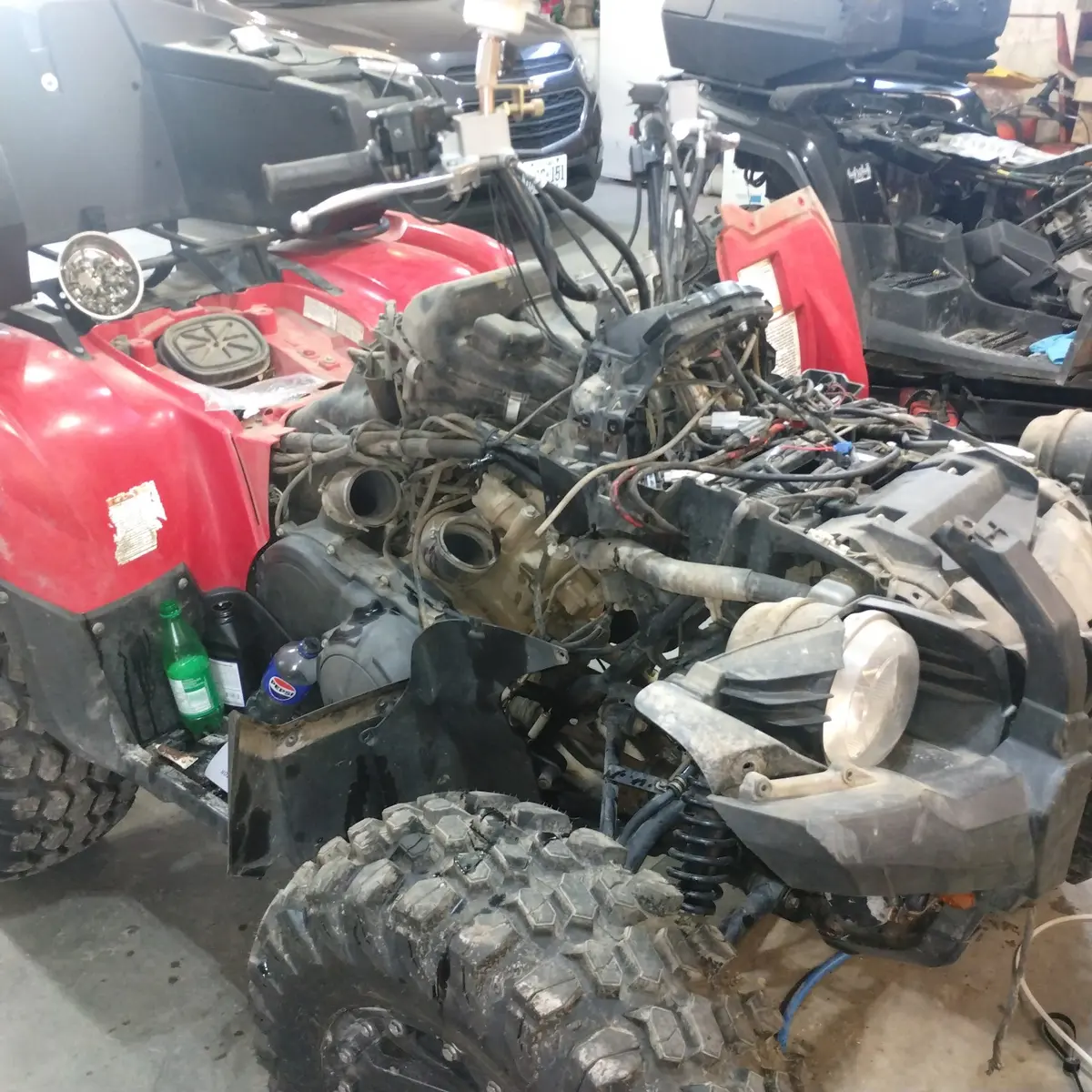
A 2012 Snyper 600 using CFMOTO fuel injection raised this exact question: the pump primed, the engine caught or tried to run, and then it died. That can make the pump seem both alive and innocent.
No completed repair is claimed from that question. The useful case lesson is that hearing a prime cycle cannot distinguish a healthy EFI supply from one that collapses as soon as demand begins.
What the prime sound does not prove
A worn pump can spin and make noise. A split in-tank hose can return fuel inside the tank. A restricted pickup can supply the brief prime but starve the running engine.
- That pressure reached the manufacturer's specification
- That pressure remains stable while cranking
- That the pump can supply enough volume under load
- That voltage and ground remain healthy after the prime command
- That the regulator, pickup and in-tank hose are intact
- That the injector is receiving a valid command
Test pressure through the whole event
Use the correct service information, fittings and gauge for the machine. Watch the reading during key-on prime, cranking, the moment it catches and the moment it dies. The shape of that pressure trace is more useful than the sound from the tank.
- Builds slowly or never reaches spec: pump, supply, regulator or leakage deserves attention
- Reaches spec then falls immediately: check retention, leakage, regulator and command
- Stable pressure but engine dies: move toward injector pulse, spark, compression and control inputs
- Pressure changes when wiring is moved: inspect loaded power, ground, relays and connectors
Voltage has to be measured under load
A digital meter can show battery voltage through a nearly broken wire when no current is flowing. Back-probe safely using the correct procedure and measure voltage drop while the pump is actually commanded.
Corroded connectors, tired relays, weak grounds and harness damage can make a good pump act weak. Replacing the pump does not repair the circuit feeding it.
Do not jump to an inline conversion
An external-pump conversion changes pickup, filtration, regulation, hose rating, mounting, electrical load and crash protection. It can be engineered properly, but it is not a shortcut around diagnosis.
First prove whether the original pump, regulator, internal plumbing or electrical supply failed. Any replacement must meet the machine's actual pressure and flow requirements and use EFI-rated components.
The correct number comes from service information for the exact model and system — not a pressure quoted for a vaguely similar machine.
If fuel pressure is good
- Check for consistent injector pulse
- Verify strong spark at the time it dies
- Inspect crank, cam, throttle and safety inputs where fitted
- Confirm compression and valve timing
- Check charging and cranking voltage
- Read stored codes and live data before clearing them
A pump that can buzz may still be unable to feed an engine. Measure pressure, volume and loaded voltage before the noise sends the repair in the wrong direction.
This is general information, not a diagnosis of your machine. Shut equipment down, remove the key, isolate the spark plug or battery as appropriate, let hot parts cool and keep fuel away from ignition sources. Stop if the check involves exposed moving parts, safety interlocks, internal timing or anything beyond your experience.